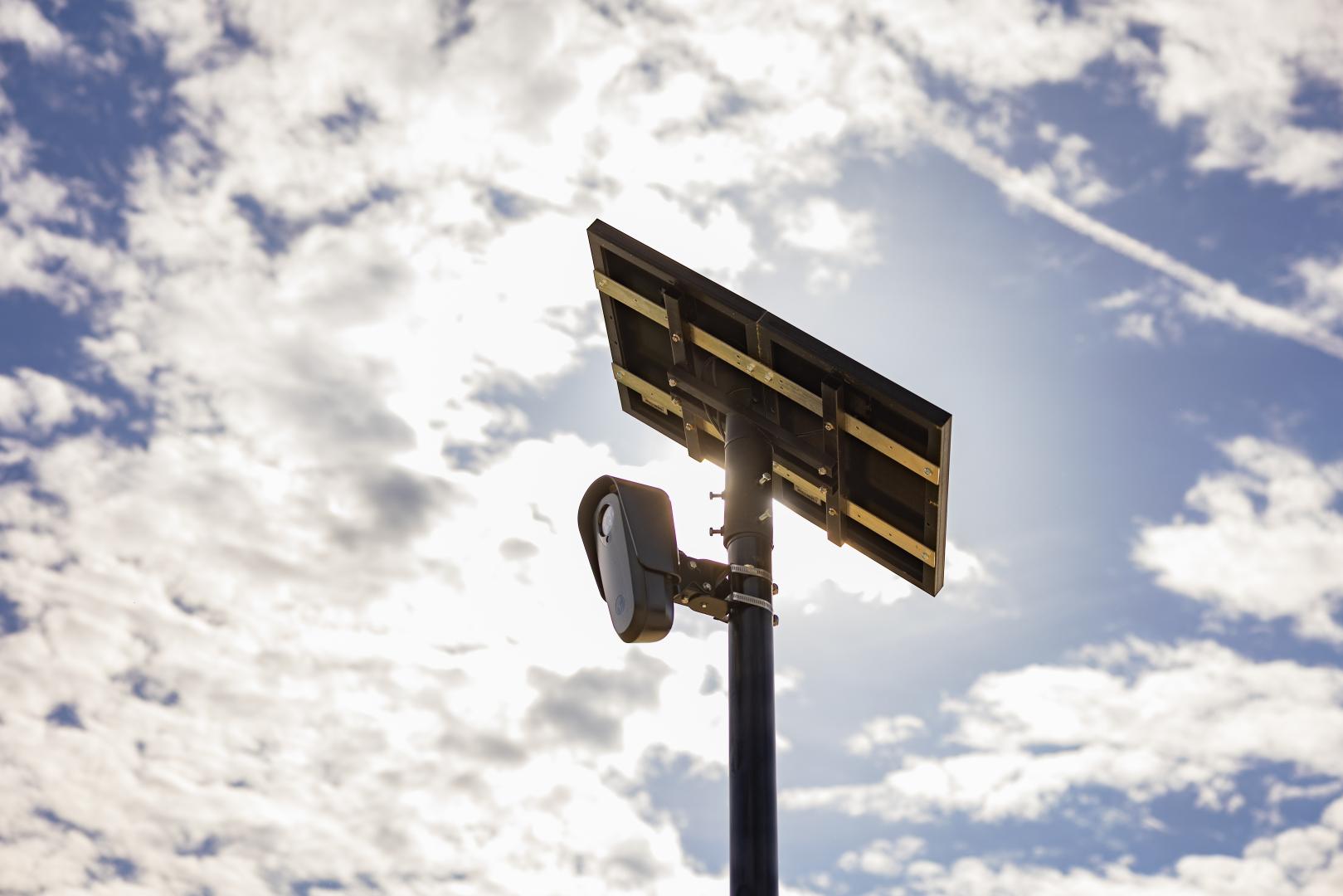
Vienna serves as a high-density node for global espionage because it offers the rare intersection of advanced telecommunications infrastructure, a high concentration of international diplomatic missions, and a legal framework that treats foreign intelligence operations as permissible provided they do not target the Austrian state directly. This specific environment has transformed the city’s skyline into a passive collection network. The proliferation of specialized radomes and antenna arrays atop diplomatic buildings is not a byproduct of administrative necessity but a calculated deployment of signals intelligence (SIGINT) hardware designed to intercept microwave, satellite, and cellular communications across Central Europe.
The Triad of Interception Mechanics
The efficacy of rooftop surveillance in a city like Vienna rests on three technical pillars: line-of-sight advantage, frequency proximity, and diplomatic immunity. To understand the Russian Federation’s specific operational footprint, one must analyze these pillars as components of an integrated data harvesting system.
1. Line-of-Sight (LoS) Optimization
In urban environments, signal degradation is the primary obstacle to high-fidelity interception. By utilizing the rooftops of sovereign diplomatic territory—specifically the Permanent Mission of the Russian Federation to the International Organizations in Vienna and the Russian Embassy—operators bypass the "urban canyon" effect. This elevation allows for the direct interception of point-to-point microwave links. These links are frequently used by government agencies and financial institutions for high-speed data transfer because they are perceived as more secure than fiber-optic cables, which require physical tapping.
2. Frequency Spectrum Dominance
The hardware observed on these rooftops, ranging from large-diameter parabolic dishes to localized high-frequency (HF) and very-high-frequency (VHF) antennas, indicates a broad-spectrum collection strategy.
- Satellite Downlink Interception: Large radomes are positioned to track and capture data from commercial and governmental satellites. This includes unencrypted metadata and, in some cases, the raw bitstreams of encrypted communications for later asynchronous decryption.
- Cellular IMSI Catchers: Deploying "Stingray" style devices at elevation allows for the mass collection of International Mobile Subscriber Identity (IMSI) data from the surrounding district. This creates a real-time map of diplomatic personnel movement within the city.
- Wi-Fi and Bluetooth Sniffing: High-gain directional antennas can target specific office buildings adjacent to diplomatic zones, exploiting vulnerabilities in local area networks (LANs) to gain initial access for lateral movement within target systems.
3. The Legal Shield of the Vienna Convention
Under the 1961 Vienna Convention on Diplomatic Relations, the "premises of the mission shall be inviolable." This clause prevents Austrian law enforcement or counter-intelligence services from inspecting or dismantling rooftop arrays, even when their purpose is overtly non-diplomatic. This creates a permanent, "hardened" SIGINT site that cannot be neutralized without a significant diplomatic rupture.
The Cost Function of Passive Collection
Maintaining a global SIGINT hub in a foreign capital involves a complex cost-benefit analysis. The Russian state operates under a constraint-heavy model where human intelligence (HUMINT) is increasingly difficult due to heightened visa scrutiny and persona non grata (PNG) declarations. Consequently, the reliance on technical collection has surged.
The "Cost of Data" in this context is measured not in currency, but in diplomatic capital and technical maintenance. A high-density rooftop array is a visual admission of intent. However, the volume of data captured—petabytes of raw electromagnetic signals—provides a strategic "lake" of information. Even if only 1% of this data is actionable in real-time, the long-term value for pattern-of-life analysis on European Union and IAEA (International Atomic Energy Agency) officials justifies the infrastructure.
Signal Processing and Backhaul
Data collected on a Vienna rooftop does not remain there. The bottleneck in this operation is the backhaul: transferring massive volumes of intercepted data back to processing centers in Moscow (such as the GRU’s 6th Directorate or the FSB’s 16th Center).
- Encrypted Diplomatic Pouches: Physical storage media (hard drives) are often moved via diplomatic courier to avoid digital detection.
- High-Bandwidth Bursts: Using dedicated satellite uplinks, the mission can transmit compressed, encrypted data packets during windows of low atmospheric interference or high diplomatic activity to mask the traffic.
Identifying the Hardware: A Forensic Breakdown
Visible equipment on the Russian mission rooftops reveals specific mission sets. Analysis of the geometry and orientation of these structures allows for a high-probability mapping of their targets.
- Cylindrical Radomes: These typically house rotating direction-finding (DF) antennas. Their purpose is to triangulate the source of radio transmissions, allowing the operators to identify which specific office in a nearby ministry is transmitting.
- Parabolic Dishes (Fixed): These are aimed at geostationary satellites. Given the coordinates of Vienna, many are oriented toward the Eutelsat or Intelsat belts, which carry the bulk of European telecommunications and government-leased bandwidth.
- Yagi-Uda Arrays: Used for targeted, long-range reception of specific radio frequencies, often utilized for monitoring emergency services or private security channels.
The Strategic Failure of Neutrality
Austria's specific interpretation of neutrality acts as a force multiplier for Russian intelligence. Unlike members of NATO or the Five Eyes alliance, Austria does not possess the same level of integrated electronic counter-measures (ECM) or the legislative mandate to disrupt these signals. This creates a "safe harbor" for electronic warfare.
The vulnerability is structural. The Austrian Federal Office for State Protection and Counter-Terrorism (DSN) is legally constrained. If a signal is intercepted from a rooftop and transmitted via satellite to Moscow, and that signal originated from a German diplomat in Vienna, no Austrian law has been broken. This legal loophole turns Vienna into a giant, unregulated switchboard for the Kremlin.
The Impact on International Organizations
Vienna hosts the IAEA, UNODC, and OSCE. The concentration of these entities makes the city a "target-rich environment."
- IAEA Monitoring: Intercepting communications regarding nuclear inspections in Iran or Ukraine provides Russia with significant leverage in multilateral negotiations.
- OSCE Transparency: As the Organization for Security and Co-operation in Europe handles sensitive conflict-resolution data, rooftop SIGINT allows Russia to anticipate Western diplomatic moves before they are officially tabled.
Quantifying the Intelligence Gap
The disparity between the collection capabilities of the Russian missions and the defensive capabilities of the host city is widening. This is not merely a quantitative gap in "more antennas," but a qualitative gap in processing power. Modern SIGINT utilizes machine learning algorithms to sort through the "noise" of a dense city to find "signals of interest" (SOIs).
While the competitor's narrative focuses on the presence of the antennas, the true strategic threat is the integration of this data. The Vienna hub acts as a regional collector for signals from across the Schengen area, utilizing the city's central geographic position.
Technical Countermeasures and Their Limits
Mitigating the threat of rooftop-based SIGINT requires a shift from legalistic complaints to technical hardening.
- TEMPEST Shielding: Organizations must implement rigorous TEMPEST standards to prevent the leakage of electromagnetic radiation from computers and cables.
- Frequency Hopping and Encryption: Moving away from static microwave links to modern, end-to-end encrypted fiber or quantum-key distribution (QKD) systems.
- Passive Jamming: The installation of "architectural shielding"—materials that block or reflect radio waves—around sensitive meeting rooms.
However, these measures are reactive. The fundamental advantage remains with the entity on the rooftop, which can adapt its collection sweep across the spectrum faster than a city of independent organizations can harden their infrastructure.
The strategic play for Western intelligence and the Austrian state is not the removal of the antennas—which is diplomatically improbable—but the systematic "poisoning" of the data pool. Feeding the collection arrays with high-confidence, low-value information (disinformation) forces the adversary to expend significant processing resources on false leads, effectively increasing the operational noise floor and reducing the signal-to-noise ratio of their entire European collection apparatus. Moving sensitive communications entirely to off-grid, air-gapped systems remains the only definitive defense against the persistent, sovereign-protected listening post.