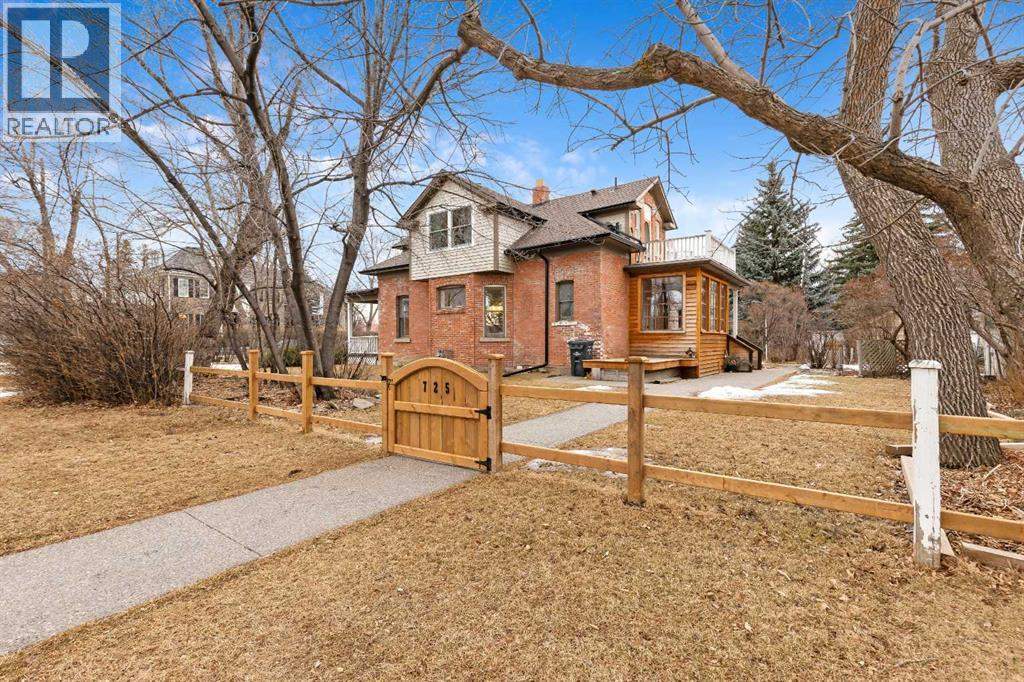
The real estate market loves a good ghost story. When the boyhood home of former Prime Minister Joe Clark hit the market in High River, Alberta, for $830,000, the media did exactly what the listing agents hoped for: they confused fame with value. They painted a picture of a "rare opportunity" to own a piece of Canadian history.
They are wrong.
In the cold, hard world of asset management, a "historic" label isn’t a premium. It is a structural anchor. Buying a house because a man who governed for 273 days once slept there isn't an investment; it’s an expensive hobby. If you are looking at the Clark residence as a savvy move in the 2026 Alberta market, you are falling for the oldest trick in the book.
The Heritage Discount Nobody Talks About
Mainstream coverage suggests that the 1909 construction and its designation on the Alberta Register of Historic Places add a layer of prestige that justifies the near-million-dollar price tag. The reality is the opposite.
In High River—a town where the average detached home price hovers significantly lower—an $830,000 sticker price for a 1,700-square-foot 1909 build is an aggressive play. When a building is designated as a historic resource, you don't truly "own" it in the modern sense. You are a glorified tenant of the provincial government.
Every time you want to replace a drafty window, repair the "refurbished double-wythe brick," or fix the "timber window frames," you enter a bureaucratic nightmare. You aren't just hiring a contractor; you are navigating the Standards and Guidelines for the Conservation of Historic Places in Canada. This "heritage value" is actually a massive, ongoing maintenance tax that the buyer pays in perpetuity.
The Myth of Political Equity
The "Joe Who?" nickname that followed Clark throughout his career ironically applies to the valuation of his childhood home. Political significance rarely translates to a linear increase in residential resale value. Unlike a waterfront view or a triple-car garage, "historical association" is subjective and depreciates the further we get from the era in question.
To a Gen Z or Millennial buyer in 2026, the 16th Prime Minister is a footnote in a history textbook, not a reason to overpay by $200,000. We’ve seen this play out globally. Unless the previous occupant was a figure of Napoleonic proportions, the market eventually corrects to the utility of the structure.
The Clark home is a "four-square" design. While sturdy, these layouts often feature "choppy" rooms and inefficient heating signatures that make modern living a chore. For $830,000 in the Calgary-High River corridor, a buyer could secure a 2024 build with 2,500 square feet, LEED-certified efficiency, and zero restrictions on whether they can paint their front door a non-period-accurate shade of blue.
High River’s Real Estate Reality Check
Let’s look at the data. The Alberta housing market in early 2026 is undergoing a "recalibration." While Calgary prices remain sticky, the surrounding bedroom communities are seeing an increase in active listings.
Buying a "trophy" property in a cooling phase is a classic amateur mistake. You are buying at the ceiling of a micro-market. If the Alberta benchmark price for detached homes is approximately $600,000, paying a 38% premium for a "PM’s boyhood home" requires that the next buyer also be a Canadian history buff with deep pockets. That is a vanishingly small secondary market.
The Hidden Costs of Old Brick
The listing boasts of a "solid poured-concrete foundation with reinforced underpinning." To a seasoned inspector, that’s code for: "This house was sinking, and we spent a fortune making sure it stopped."
Old homes are bottomless pits for capital. Even "restored" properties face issues with:
- Insurance Premiums: Many providers hike rates or flat-out refuse to cover 115-year-old structures with original woodwork.
- Thermal Inefficiency: You can "refurbish" brick all you want, but 1909 insulation standards are a joke compared to 2026 requirements.
- Zoning Stagnation: Your ability to subdivide or add an ADU (Accessory Dwelling Unit) is often strangled by heritage preservation bylaws.
Imagine a scenario where the 2026 energy pivot continues to drive up carbon taxes. The owner of a sprawling, drafty historic mansion will be bleeding cash while the owner of a boring, modern suburban box stays in the black.
Stop Buying Stories, Start Buying Utility
The "lazy consensus" is that history is priceless. In real estate, everything has a price, and history is usually overpriced.
If you want to honor Joe Clark, go to a library. If you want to build wealth in the Alberta corridor, ignore the provenance and look at the price per square foot, the R-value of the walls, and the freedom to renovate without a permit from a historical society.
The Clark residence is a beautiful museum piece. But you don't want to live in a museum—especially not one that costs $830,000 and comes with a list of rules long enough to be a federal bill.
Would you like me to analyze the comparative investment yield of 2026 Alberta new-builds versus these heritage-listed properties?