The air in a legislative hearing room has a specific, stifling weight. It smells of old floor wax and expensive wool. When a high-ranking public official sits behind a microphone, there is a silent contract between the speaker and the citizens: the words spoken here are anchored to reality. They are not suggestions. They are not "vibes." They are meant to be the truth.
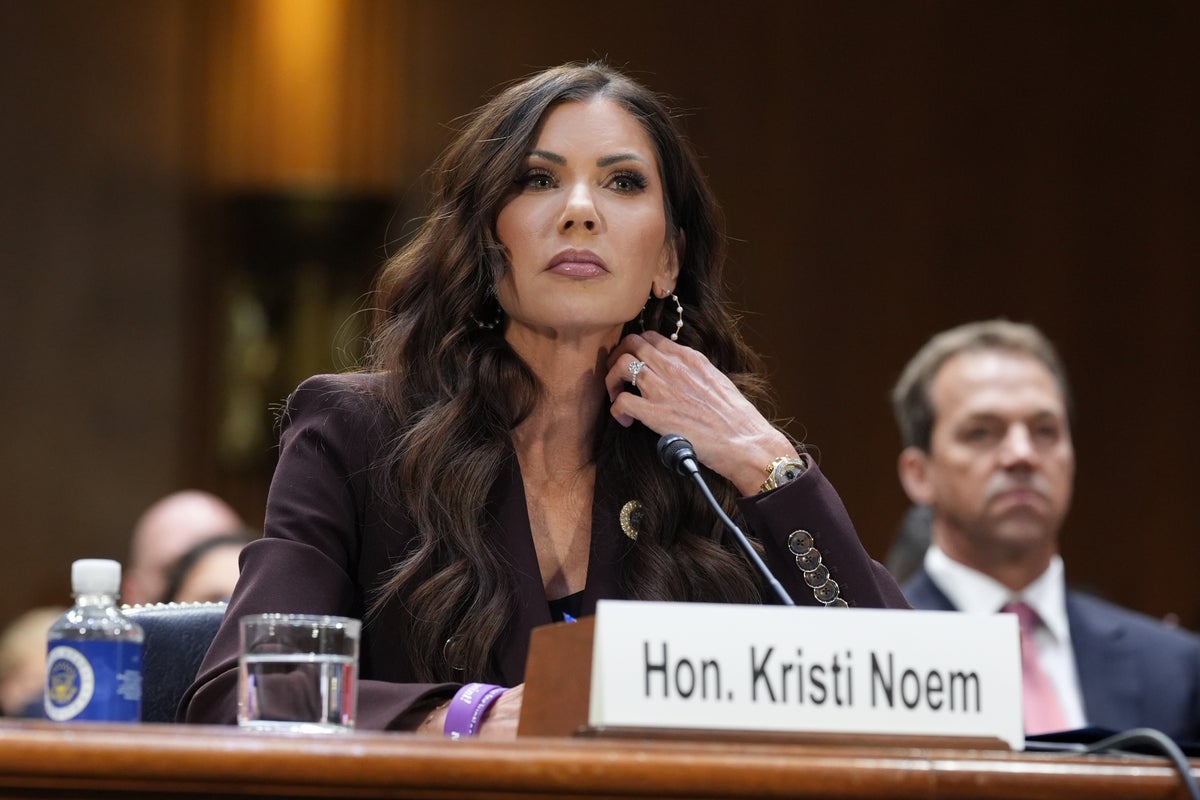
South Dakota Governor Kristi Noem sat in that weightiness, facing questions about a massive $220 million Department of Homeland Security (DHS) advertising campaign. The numbers were staggering. For a state like South Dakota, that kind of capital is transformative. It is the difference between crumbling infrastructure and a future. But as the words left her lips, a different kind of architecture began to crumble—the integrity of the public record. For an alternative view, consider: this related article.
The Department of Justice now holds a referral that suggests those words weren't just a mistake. They were, according to the allegations, perjury.
The Anatomy of a High-Stakes Claim
To understand why a state governor would find herself in the crosshairs of a federal referral, you have to look at the currency of modern politics. It isn't just votes. It is attention. Specifically, it is the ability to claim credit for massive federal wins while simultaneously positioning oneself as a maverick outsider. Similar reporting on this matter has been shared by BBC News.
Noem claimed she had been awarded or was managing a specific $220 million DHS contract for a nationwide "border security" ad campaign. It was a bold, muscular assertion. It suggested a level of federal trust and administrative scale that would make any ambitious politician look like a titan of industry.
But the DHS had no record of it.
The money didn't exist in the way she described. The "award" was a ghost. When the non-partisan watchdog groups and opposing lawmakers started pulling at the threads, the entire tapestry of the claim didn't just fray—it vanished.
Consider the hypothetical small-business owner in Pierre, South Dakota. Let’s call him Elias. Elias runs a print shop. If Elias lies on a loan application about a $20,000 contract he hasn't signed, he goes to jail for fraud. If he swears in a deposition that his revenue is ten times higher than it is, the legal system grinds him to powder. The system relies on the idea that facts are not flexible.
When that same standard is applied to the highest office in a state, the friction becomes explosive. The referral to the DOJ isn't just about a "brazen" false statement. It is about whether the law applies to the person who signs the laws.
The Invisible Stakes of Public Trust
We often treat political scandals like sports scores. One side wins, the other loses, and we move on to the next Sunday. But this isn't a game. There is a hidden cost to these $220 million mirages.
When a leader provides testimony that is later labeled as perjury, it creates a "truth decay" that leaches into the soil of every other public project. If the governor can be "mistaken" about nearly a quarter of a billion dollars, why should the average citizen trust the numbers on a local school bond? Why should they believe the data regarding healthcare or climate or the economy?
The accusation here is that the statements were "brazen." That word matters. It implies a lack of shame, a sense of invincibility. It suggests that the speaker believed the narrative was more important than the ledger. In the world of high-level politics, the narrative is often used to mask a void. If you can’t show results, you show a campaign. If you can’t show a campaign, you show a budget. And if you don’t have the budget, apparently, you just invent one.
The Paper Trail to the DOJ
The transition from a "political gaffe" to a "criminal referral" is a long, arduous process. It requires investigators to look at the gap between what was known and what was said.
In this instance, the discrepancy wasn't a rounding error. You don’t accidentally add three zeros to a contract. You don’t "forget" that the Department of Homeland Security hasn't actually handed you the keys to a $220 million vault. The referral alleges that Noem knew the statements were false at the moment she made them.
That is the definition of perjury.
The Department of Justice doesn't take these referrals lightly, especially when they involve a sitting governor. The process is a slow-motion collision of executive power and judicial oversight. For Noem, who has spent years building a brand based on "plain-spoken" Western values and "common sense" leadership, the irony is thick enough to choke.
The "common sense" of a South Dakota rancher doesn't usually include claiming credit for $220 million that doesn't exist.
Why This Matters More Than We Think
It is tempting to look at this as just another headline in a polarized era. But look deeper. Look at the human element of the bureaucrats who actually have to manage these funds.
Imagine a mid-level analyst at the DHS. Their job is to track every penny of taxpayer money. They see a governor on television claiming they’ve been handed a massive contract that hasn't even cleared the first hurdle of approval. That analyst now has to spend hundreds of hours answering inquiries, filing reports, and correcting the record. This is a massive drain on public resources, all to chase a ghost created for a press release.
Then there are the constituents. People who heard about the $220 million and felt a surge of pride or a sense of security. They believed their state was leading the charge on a national issue. When the truth comes out, the feeling isn't just disappointment. It’s a quiet, cold realization that they are being used as props in someone else’s career climb.
The stakes are the very foundations of how we communicate. If we accept that a $220 million lie is just "politics as usual," we are effectively resigning from reality. We are saying that the truth is whatever the person with the loudest microphone says it is.
The Weight of the Gavel
The referral is now in the hands of federal prosecutors. They will look at the transcripts. They will look at the DHS correspondence. They will look at the timeline of who knew what and when.
If the DOJ moves forward, it sets a precedent that the halls of government are not a stage for performance art. They are rooms where actions have consequences. The "brazen" nature of the statements suggests a gamble—a bet that the news cycle moves too fast for the truth to catch up.
But the truth is patient. It doesn't need a $220 million ad campaign to exist. It sits in the files, in the emails, and in the memory of the stenographer who typed out every word of that testimony.
The story of Kristi Noem and the DHS campaign isn't really about a budget. It’s about the fragility of the social contract. It’s about the moment we realize that the person leading the parade is describing a grand float that no one else can see.
The cost of that mirage is finally coming due. It won't be paid in federal grants or campaign donations. It will be paid in the cold, hard currency of accountability.
The microphone is still on. The room is still waiting. And the truth, unadorned and unbought, is finally stepping into the light.
Would you like me to look into the specific legal statutes cited in the DOJ referral to see how they apply to executive testimony?